What causes plantar fasciitis?
Plantar fasciitis is inflammation and micro-strain in the band of tissue that runs along the bottom of your foot, and it almost never comes from one bad step. It builds from tight calves, weak foot muscles, unsupportive footwear, or a sudden jump in how much time you spend on your feet. The sharp pain with your first steps in the morning is the fascia protesting after resting overnight in a shortened position.
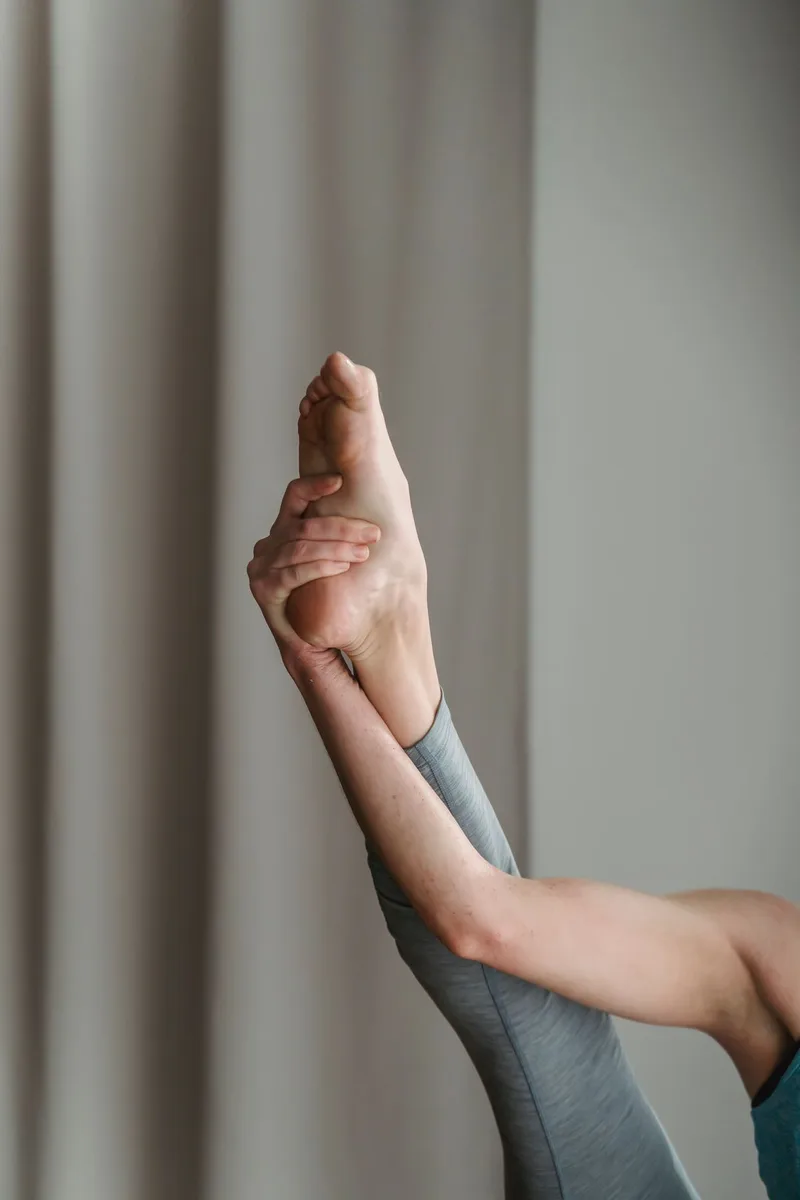
Your calf muscles and Achilles tendon connect directly into the tissue of your foot through the back of the heel. When they are tight, every step pulls extra tension through the plantar fascia, especially first thing in the morning before anything has warmed up. Stretching alone rarely fixes chronically tight calves. It takes consistent mobility work paired with strengthening to change how much tension gets transferred into the bottom of your foot.
The small muscles inside your foot are supposed to help support your arch and absorb shock with every step. When they are weak, which is extremely common in people who wear supportive shoes all day and never challenge those muscles, the plantar fascia takes on load it was never meant to carry alone. Flat feet or arches that lack flexibility make this worse. Strengthening the foot itself is often the missing piece in fixing heel pain for good.
Starting a new running program, taking a job that has you on your feet all day, or simply walking a lot more than usual can overload a plantar fascia that was not conditioned for the change. The tissue needs time to adapt to new demands, and a rapid increase in load without that adaptation period is one of the most common triggers we see. Building volume gradually protects the fascia while it strengthens.
Shoes without adequate arch support or cushioning force the plantar fascia to work harder to stabilize your foot with every step. Old, worn-out shoes lose their support long before they look obviously damaged. Even good shoes eventually break down. The right footwear, sometimes paired with orthotics, takes pressure off the fascia while you rebuild the strength that lets your foot support itself.
Jobs that require hours of standing on concrete or tile, without breaks or supportive footwear, place constant, low-grade strain on the plantar fascia throughout the day. There is rarely one moment where the pain starts. It accumulates hour after hour, shift after shift, until the tissue cannot keep up. Addressing the standing surface, footwear, and the strength of the foot together is what changes the pattern.