(603) 770-0408 · 68A Fogg Rd
Ability Allies

Shockwave Therapy in Seacoast

Shockwave Therapy jolts chronic, stubborn tendon pain out of the stalled healing loop it has been stuck in for months, often within a handful of sessions.

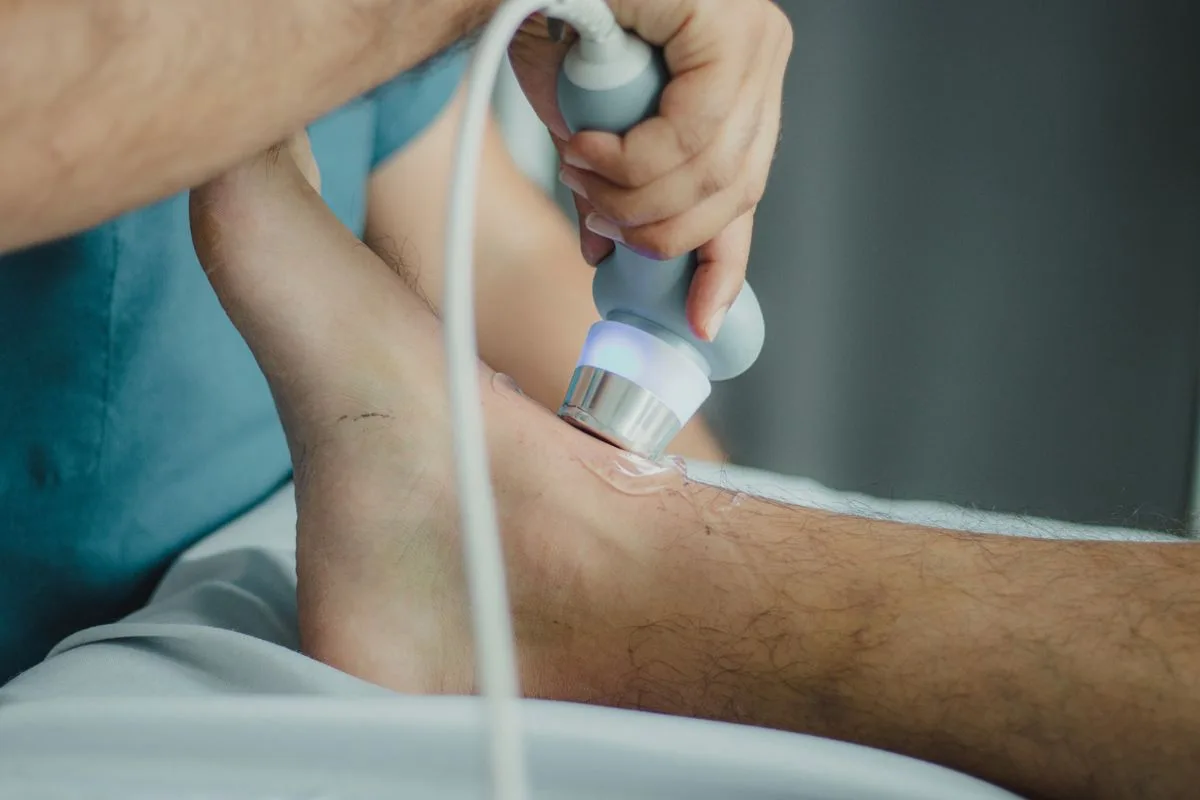
Shockwave Therapy treatment session with a physical therapist at Ability Allies in Seacoast, NH
01What It Is

What is Shockwave Therapy?

Shockwave Therapy, more formally extracorporeal shockwave therapy, uses focused acoustic pressure waves delivered through a handheld applicator directly into injured tissue. These pressure waves are not electrical shocks. They are pulses of energy that pass through the skin and create controlled micro-trauma in the targeted tissue, which sounds counterintuitive until you understand what that micro-trauma triggers. The body responds to this controlled disruption by increasing blood flow to the area, stimulating the growth of new blood vessels, and kickstarting collagen production, essentially restarting a healing response that has stalled out. This makes it especially effective for chronic tendon conditions where the tissue has stopped healing on its own. Plantar fasciitis that has not responded to stretching and orthotics, tennis elbow, golfer's elbow, Achilles tendinopathy, and calcific tendinitis in the shoulder are the conditions where shockwave tends to make the biggest difference, precisely because these are cases where the body's normal repair process has essentially given up. Sessions are brief, typically lasting only a few minutes, and most treatment plans call for several sessions spaced roughly a week apart to build a cumulative healing response.

Dosing matters more than people expect. The intensity, frequency, and treatment head size all need to be matched to the specific tissue and how deep the target sits beneath the skin, and getting this wrong either under-treats the area or causes unnecessary discomfort. A therapist trained in shockwave application adjusts these settings based on your specific condition and your tolerance during treatment, checking in throughout the session rather than running a single fixed protocol on everyone who walks through the door, since two people with the same diagnosis rarely need the same dose.

02Who It's For

Who it's for.

Shockwave Therapy is for chronic tendon and soft tissue pain that has plateaued despite other treatment. These are the conditions we see respond best.

01

Plantar fasciitis that will not let up

Stretching, orthotics, and rest have only gotten you partway there, and heel pain still greets you every morning. Shockwave targets the thickened, stubborn tissue directly, restarting the healing response that months of conservative care could not finish on its own, often in far fewer visits than continued stretching alone would take.

02

Tennis elbow or golfer's elbow that lingers

Elbow pain that flares with gripping or lifting has outlasted rest and bracing. Shockwave stimulates the tendon directly at the point of attachment, addressing degenerated tissue that time alone was not going to resolve, especially in cases that have dragged on for many months already.

03

Achilles or shoulder tendon pain that has plateaued

Chronic Achilles tendinopathy or calcific shoulder tendinitis often reaches a point where the tissue simply stops progressing on its own. Shockwave disrupts that stalled state and gives the tendon a genuine chance to finish healing instead of managing the same nagging pain indefinitely.

03What To Expect

What to expect in a session.

Shockwave Therapy sessions are brief and focused, with most plans built around several visits spaced about a week apart.

01

Assessment and target identification

Your therapist locates the exact point of tissue involvement through palpation and movement testing, since precise placement is what makes the treatment effective. You will know exactly where the applicator is headed before treatment starts, and why that specific spot was chosen.

02

The shockwave treatment itself

The handheld applicator delivers pulses of pressure to the target area for several minutes. You will feel a distinct thumping or aching sensation that can be uncomfortable but should never be unbearable, and your therapist adjusts intensity based on your feedback throughout the session.

03

Post-treatment activity and progression

Mild soreness for a day or two afterward is normal and expected. Your therapist gives you specific guidance on activity level between sessions, since the tissue needs a bit of time to respond before the next treatment builds on the progress already made.

Safety note

Shockwave Therapy is not appropriate during pregnancy, over an implanted pacemaker, directly over an active growth plate in a child or teenager, or in areas with a known blood clot or tumor. Tell your therapist about any of these factors before your first session so treatment can be planned safely.

In Their Words
The best place for physical therapy hands down.
Kevin L. · Google review
Your Next Step

From stalled healing to a tendon that recovers.

Shockwave is one tool for tendon pain that has plateaued. Your therapist may also use Graston Technique, ASTYM, or laser therapy alongside a strengthening plan in physical therapy.

Find out if shockwave fits your case at our Portsmouth physical therapy clinic, Dover clinic, or Epping clinic. No referral needed in New Hampshire.

Explore More

Where to go next.

Request an Appointment

Ready when you are.

Epping HoursMon–Fri 8am–7pm, Sat–Sun Closed
Walk-insCall ahead
ClinicsPortsmouth · Dover · Epping
Book your evaluation. Same-week appointments available.
Step 1 of 6
First things first. What's your name?
We'll need a name to book you in.
Best number to reach you?
A phone number lets us confirm same-day.
And your email?
We'll send your confirmation here.
What questions do you have about your pain or injury?
A few words is all we need.
Which clinic works best for you?
Pick the clinic you'd like to visit.
Look right? Send it.
✓
Request received.

We'll call within business hours to lock in your time.

Book Now