(603) 770-0408 · 68A Fogg Rd
Ability Allies

Golf Injury Specialist in Seacoast

Your swing did not break overnight, and it will not fix itself either. Rehab built around the rotation, load, and mechanics that got you hurt in the first place.

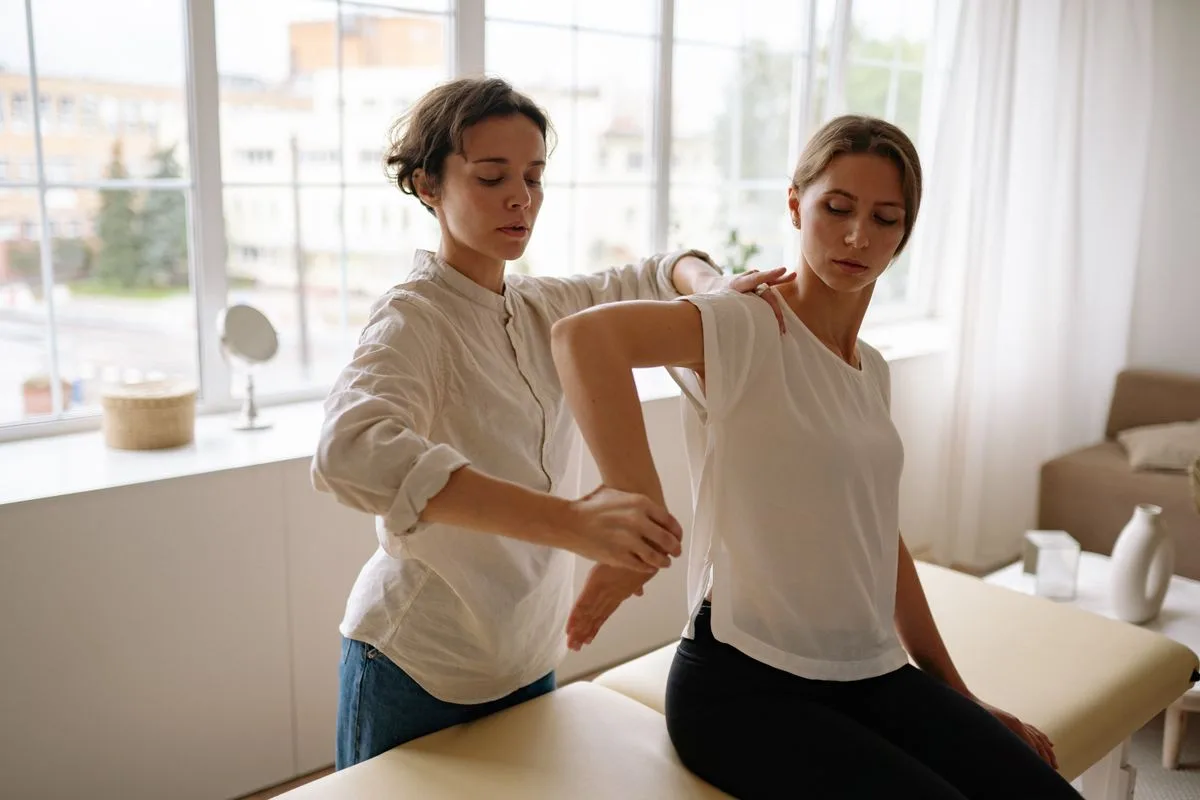
Golf Injury Specialist treatment session with a physical therapist at Ability Allies in Seacoast, NH
01What It Is

What is golf injury specialist care?

You have rested it, iced it, maybe even seen a general therapist, and the pain still shows up the moment you take a real swing. That is because a golf swing is one of the most demanding movements in sport for the body's rotational chain, and generic treatment rarely addresses what actually caused the injury. A full swing loads the spine, hips, and shoulders with repeated, forceful rotation, often thousands of times a season, while the lead side absorbs asymmetric stress that most other activities never place on the body. That combination is exactly why golfers show up with a predictable set of injuries: golfer's elbow from the wrist snap through impact, low back strain from the compression and shear created by rotating and extending at the same time, and shoulder or rotator cuff pain from the range demanded at the top of the backswing and through follow-through. Golf injury specialist care starts by looking at the swing itself, not just the sore spot, evaluating hip and thoracic spine rotation, shoulder mobility, and the sequencing of the swing to find where a restriction or weakness is forcing another area to compensate and eventually break down.

Treating a golf injury without understanding the swing is treating half the problem. A therapist who works with golfers regularly looks at how you actually move through your swing, sometimes using video, and connects that movement pattern to the specific tissue that is inflamed or strained. That connection is what separates rehab that gets you back to full swings from rehab that only quiets the pain for a week before it returns the next time you play.
02Who It's For

Who it's for.

Golf injury specialist care is for any golfer whose swing is limited or painful, whether you are chasing your handicap or just trying to play a full round without wincing. These are the swings we see most.

01

Golfer's elbow from grip and impact

The inside of your elbow flares up every time you strike the ball, or even when you shake hands the next morning. We address the wrist flexor overload from impact and grip, then rebuild the strength and mechanics that keep it from returning.

02

Low back pain from your swing's rotation

Your back tightens up mid-round or aches the day after you play. Rotational load through the spine is often the driver. We restore hip and thoracic mobility so your spine stops absorbing rotation it was never meant to handle alone.

03

Shoulder pain limiting your backswing

Your top of backswing feels tight, or follow-through brings on a pinch. We assess shoulder mobility and rotator cuff strength and rebuild the range you need without forcing your body to compensate through the swing.

03What To Expect

What to expect in a session.

Golf injury sessions connect swing mechanics to treatment from the first visit, then build back toward a full, pain-free swing in careful, deliberate stages.

01

Swing and movement assessment

Your therapist reviews your injury history and assesses hip, spine, and shoulder mobility, along with how you move through your swing, sometimes referencing video if you have it. This shows exactly where the swing is placing extra demand on the injured area.

02

Hands-on treatment and corrective exercise

Manual therapy and targeted exercise address the specific restriction or weakness feeding the injury, whether that is hip rotation, thoracic mobility, or shoulder strength. Each session builds on where your body actually is, not a generic golf fitness plan.

03

Return-to-swing progression

Once the underlying issue is addressed, you progress from half-swings to full-speed swings under guidance, so your body is tested gradually instead of all at once on the course. You leave with a plan for the range and the course.

Safety note

Returning to full-speed swings too soon after an injury is one of the most common reasons golfers get hurt again. Your therapist will guide the pace of that return, so hold off on competitive rounds and full-speed practice swings until you are cleared for them.

In Their Words
The best place for physical therapy hands down.
Kevin L. · Google review
Your Next Step

From a painful swing to a full round.

Injured now? Start with golf injury rehab here. Healthy and want more from your game? Our golf clinic pairs a swing analysis with a physical screen. Many golfers also benefit from sports physical therapy and dry needling.

Get your swing and your body evaluated at our Portsmouth physical therapy clinic, Dover clinic, or Epping clinic. No referral needed in New Hampshire.

Explore More

Where to go next.

Request an Appointment

Ready when you are.

Epping HoursMon–Fri 8am–7pm, Sat–Sun Closed
Walk-insCall ahead
ClinicsPortsmouth · Dover · Epping
Book your evaluation. Same-week appointments available.
Step 1 of 6
First things first. What's your name?
We'll need a name to book you in.
Best number to reach you?
A phone number lets us confirm same-day.
And your email?
We'll send your confirmation here.
What questions do you have about your pain or injury?
A few words is all we need.
Which clinic works best for you?
Pick the clinic you'd like to visit.
Look right? Send it.
✓
Request received.

We'll call within business hours to lock in your time.

Book Now