What causes neck pain?
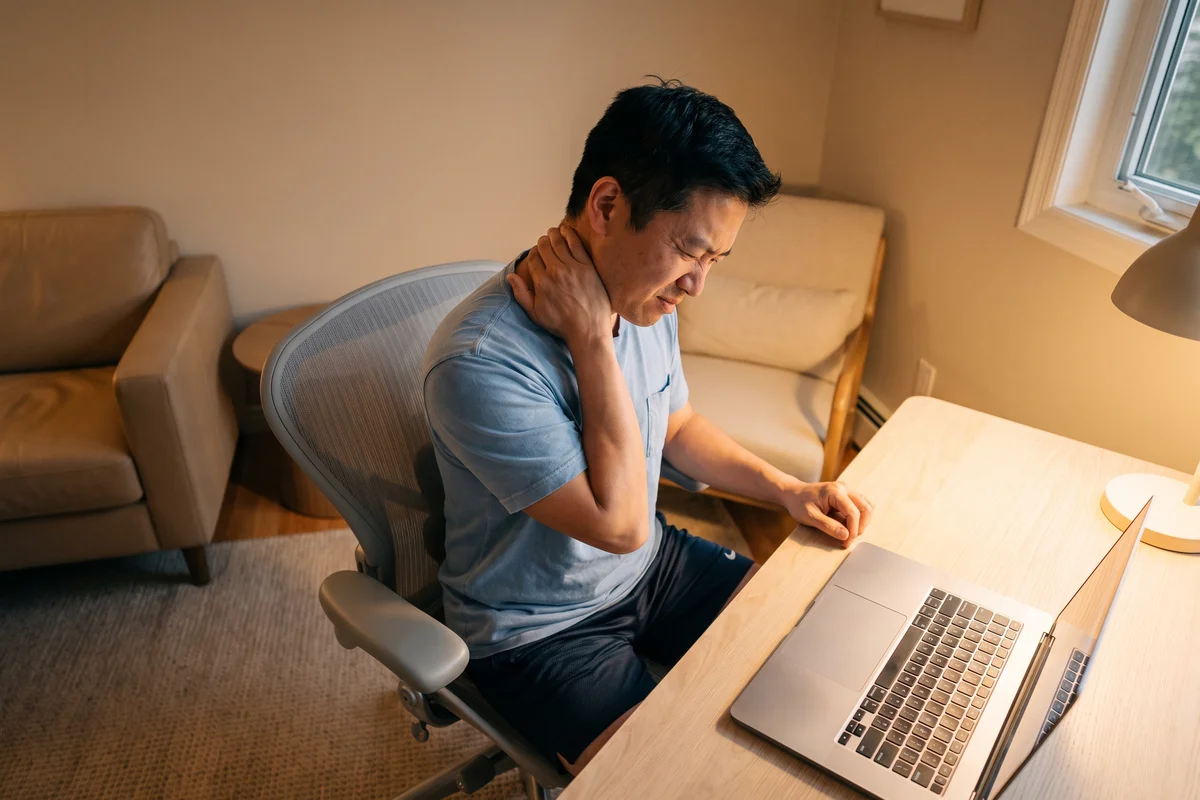
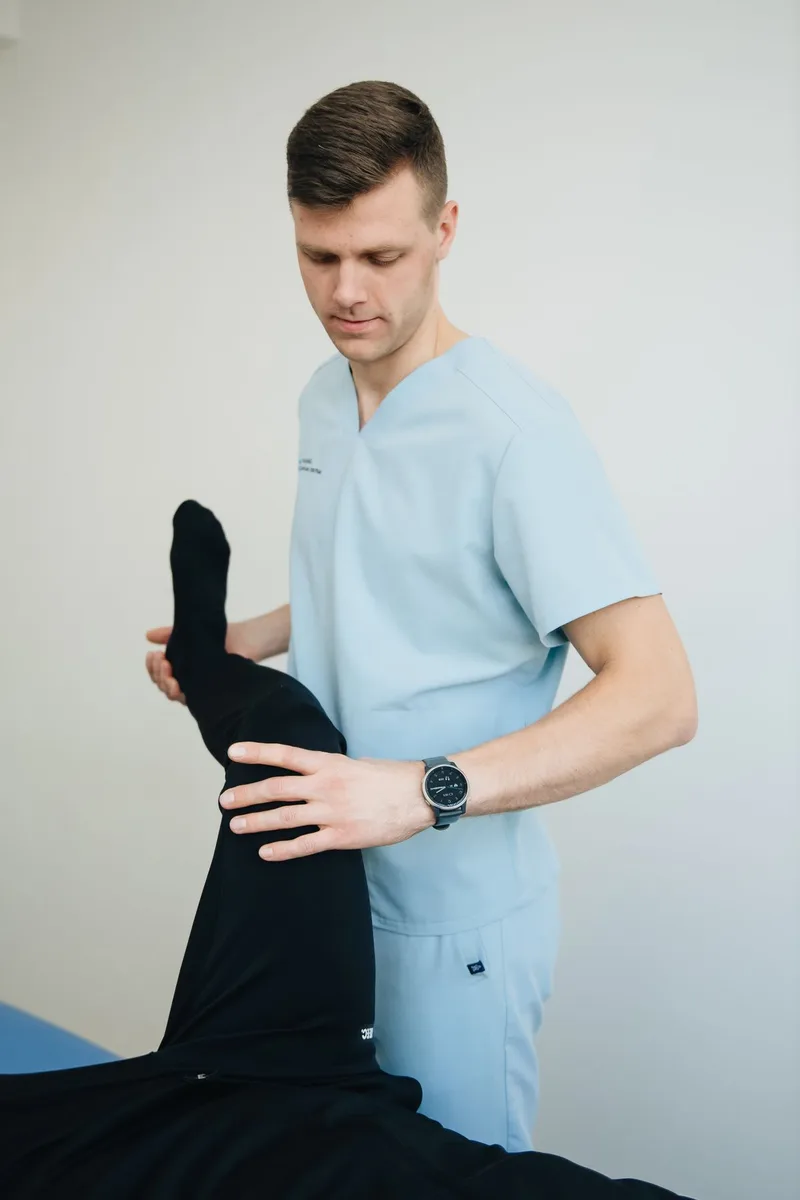
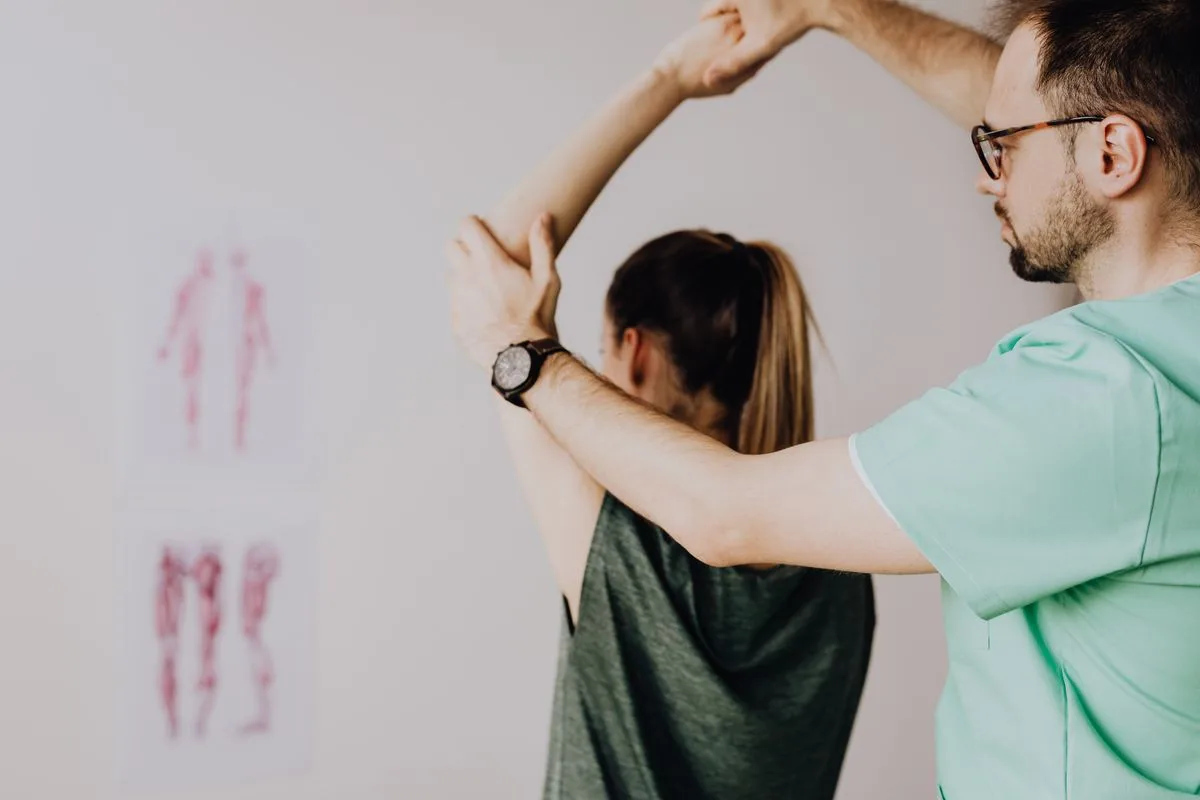
Neck pain is rarely random. It builds from how you sit at a desk, how you sleep, an old whiplash injury that never fully resolved, or years of tension held in the muscles at the base of your skull. The cervical spine is also one of the least forgiving areas of the body when it comes to compensation, so a stiff upper back or weak shoulder blades can quietly load the neck for months before pain ever shows up. Finding the real driver is what makes treatment stick.
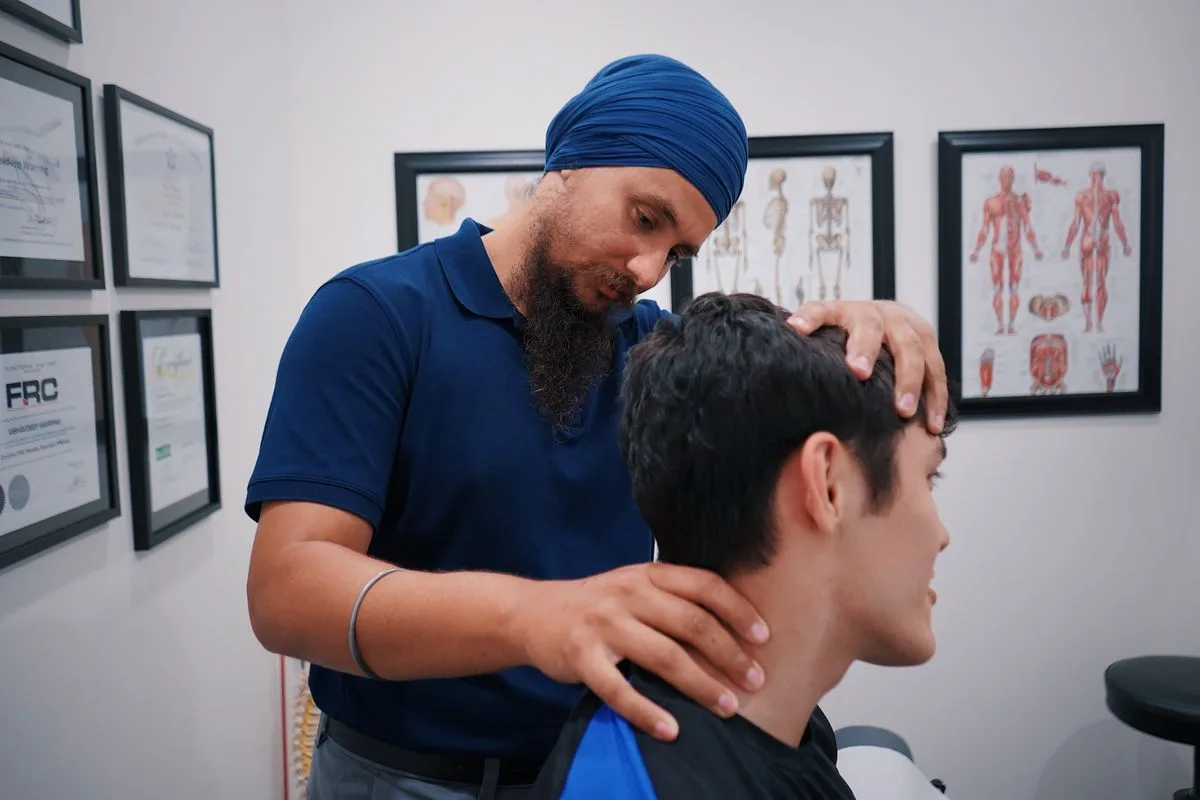
Hours spent looking down at a screen or phone push your head forward of your shoulders, and for every inch forward, the muscles at the base of your neck have to work dramatically harder just to hold your head up. Over months those muscles fatigue, tighten, and start sending pain signals. This is one of the most common and most fixable causes of neck pain we see, because changing how you sit and rebuilding the strength to hold a better position often resolves it.
A rear-end collision or sudden jolt whips the neck forward and back faster than the muscles can brace for it, straining ligaments and small stabilizing muscles that rarely get checked afterward. Pain and stiffness can show up days later, once inflammation sets in. Left unaddressed, this leaves the neck guarded and weak long after the collision itself is a memory. Structured rehab restores the stability and confidence that whiplash takes away.
The discs and small joints in the cervical spine change with age and years of use, sometimes narrowing the space where nerves exit the spine. This does not automatically mean pain or that surgery is inevitable. Many people have these changes on imaging with no symptoms at all. What often determines whether it hurts is how well the surrounding muscles support the spine, and strengthening around the affected level frequently brings relief.
Sleeping in an awkward position, sudden movements, or overusing the neck during a workout strains the small muscles that support your head. A pillow that does not support your neck's natural curve compounds the problem night after night. These strains usually heal in days but linger when the tissue never fully recovers before it is loaded again. Identifying and correcting the aggravating pattern is often the missing piece.
The trapezius and other muscles across your shoulders and upper neck are notorious for holding tension when you are stressed, whether or not you notice yourself doing it. Clenched shoulders and a tight jaw over weeks become a constant, low-grade ache that feels like it comes from nowhere. Addressing the muscle tension directly, along with posture retraining, interrupts a pattern that otherwise repeats itself daily.