Joint aches, pelvic changes, and shifts in strength during menopause are often brushed off as just aging. They deserve real attention, and physical therapy has specific tools to help your body adapt well through this transition.
Menopause changes far more than your cycle. Declining estrogen affects joint and muscle tissue, bone density, connective tissue elasticity, and the strength and support of the pelvic floor. That is why so many women notice new aches, stiffness, or bladder changes during this time, even without a specific injury. None of this is inevitable decline you must simply accept. Physical therapy targets the specific tissues and systems affected so you keep moving well through menopause and beyond.

Estrogen plays a role in joint lubrication and the health of the collagen that supports your muscles and connective tissue. As it declines, many women notice new stiffness or achiness that seems to appear out of nowhere, sometimes called menopause joint pain. Targeted mobility work and strengthening address this directly rather than leaving it to simply progress.
Declining estrogen accelerates bone loss for many women during and after menopause, which can increase fracture risk over time. Weight-bearing exercise and structured strength training are among the most effective ways to protect bone density, and a physical therapist can build a program that challenges your bones safely.
Thinning tissue and a weaker pelvic floor are common during menopause and can contribute to urgency or leaking that was not present before. This is one of the most common and most treatable menopause symptoms, and pelvic floor physical therapy addresses the muscles and tissue involved directly.
Natural muscle loss tends to accelerate around menopause, which can affect strength, balance, and posture. This is not something you simply have to live with. Resistance training specifically counters this loss, and it is one of the most powerful tools available during this transition.
Hot flashes and night sweats often disrupt sleep during menopause, and poor sleep impairs tissue recovery while increasing sensitivity to pain. Gentle, consistent movement and a well-paced treatment plan help your body recover even when sleep is inconsistent.

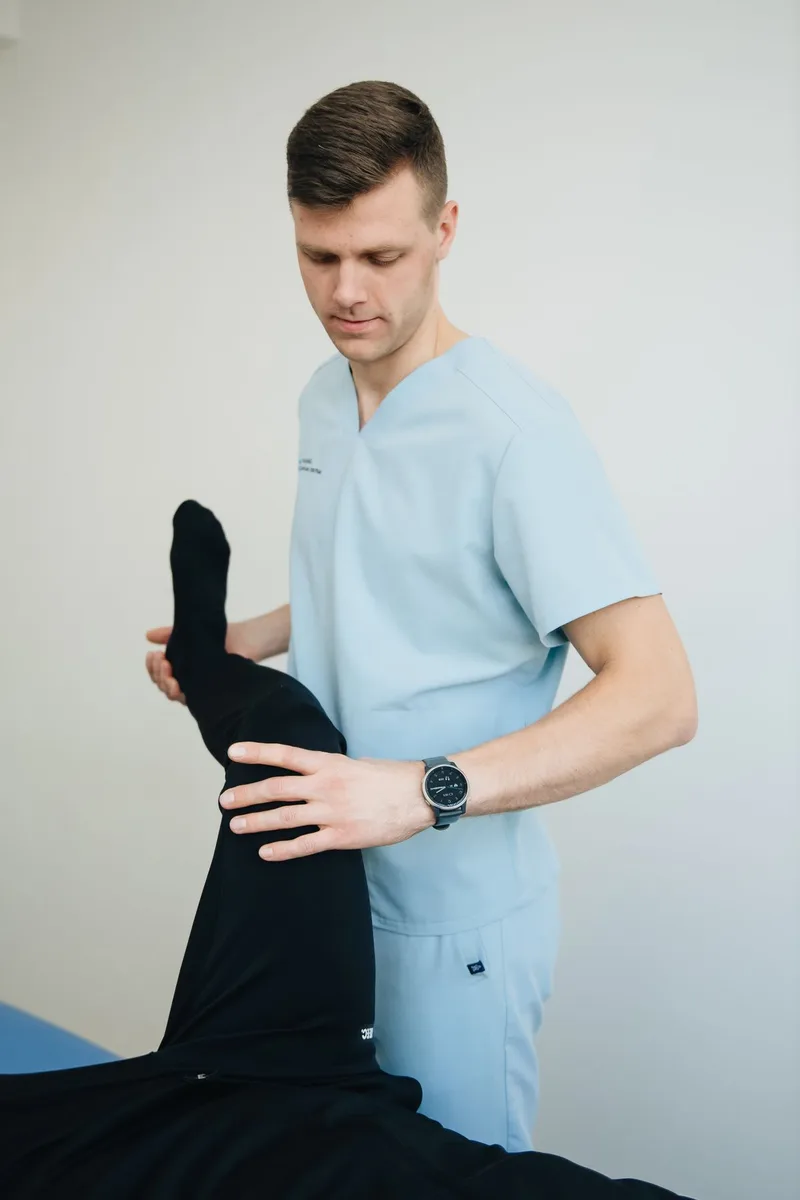
Menopause is not a condition to treat so much as a transition your whole body is moving through, and physical therapy meets you at whichever part of that transition is giving you trouble. If joints ache and feel stiffer than they used to, we build strength and mobility that protects them. If bladder urgency, leaking, or pelvic discomfort have shown up alongside other changes, pelvic floor therapy addresses those muscles directly, with any internal assessment explained fully and done only with your consent. If balance or muscle mass feel different than they used to, we build a progressive strength program that rebuilds what menopause has started to take. Manual therapy helps with tension and restriction along the way. The plan is built around your specific symptoms rather than a generic checklist, because menopause looks different for every woman. The goal is simple: you keep doing the things you love, with a body that feels capable rather than unpredictable.
We assess joint mobility, strength, posture, and, if relevant to you, pelvic floor function. We ask about sleep, activity level, and what has changed, so your plan reflects your actual symptoms rather than a generic template.
Whether it is joint stiffness, muscle loss, or pelvic floor symptoms, we use manual therapy and specific exercise to address the tissue that needs it. Progress is often steady once the right target is identified.
We progress your strength, balance, and mobility program so it keeps protecting your bones, joints, and pelvic floor well past this transition. You leave with a plan that grows with you.
My therapist, Dr Julia Miller, is so thorough and knowledgeable, I'm confident I'll reach my goals!
Menopause care can combine pelvic floor therapy for bladder and pelvic changes with physical therapy and manual therapy for joint aches and strength.
Ability Allies has clinics in Portsmouth, NH, Dover, NH, and Epping, NH. Call (603) 770-0408 about menopause symptoms and we will match you with the right therapist and location. No referral needed in New Hampshire.

Balance issues often affect how the hips and knees absorb load. We treat the full picture.

Dizziness and migraines often appear together. Treating one often helps the other.

Vestibular dysfunction can trigger pain cycles. We address both the dizziness and compensation patterns.