(603) 770-0408 · 68A Fogg Rd
Running Injuries

Why Does My Knee Hurt When I Run?

Knee pain is one of the most common running complaints. The good news is that the cause is often above or below the knee, and that is something you can work on.

Medically reviewed by Dr. Natalie Tilton, PT, DPT, Owner of Ability Allies · Published

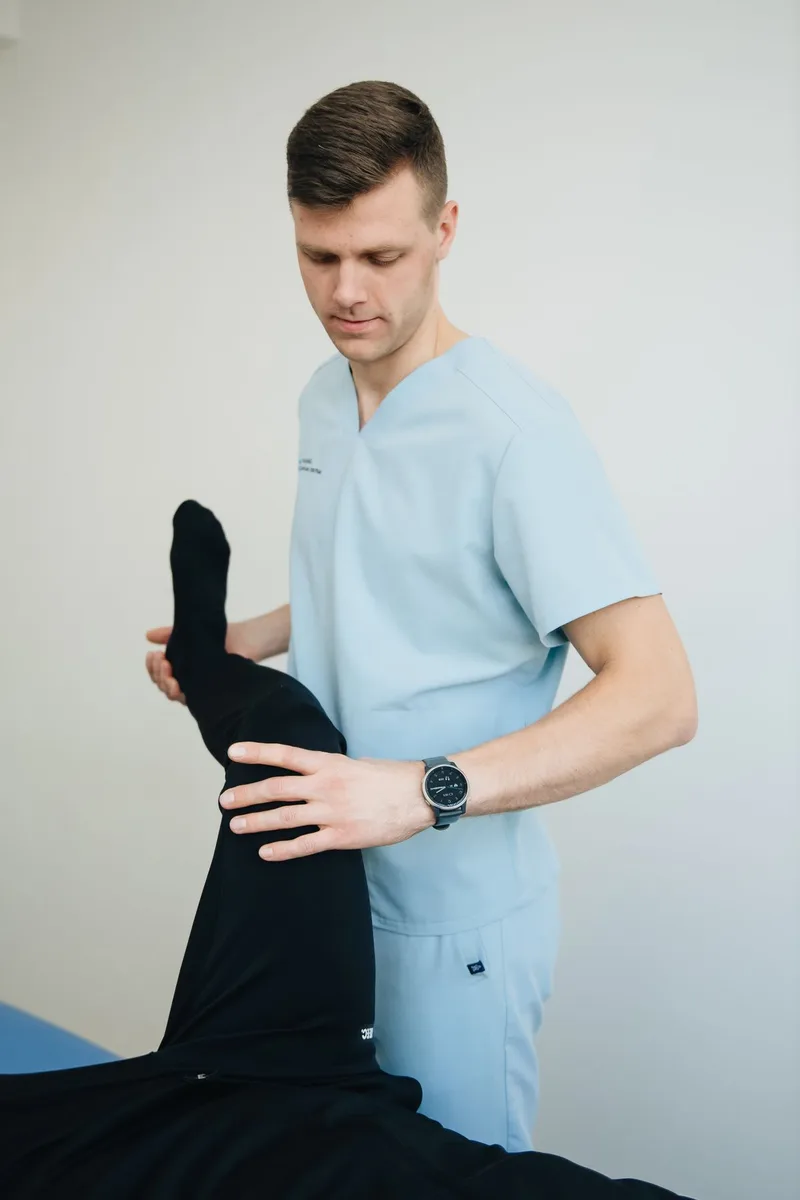
Therapist rehabilitating a patient’s hip and knee
01The Big Picture

Why the knee takes the hit.

The knee sits between the hip and the foot. When either of those areas is weak, stiff, or poorly controlled, the knee often ends up absorbing the difference. Every running stride loads the knee, and over hundreds or thousands of strides a small mechanical issue can add up to real pain.

Training habits matter just as much. A sudden jump in mileage, more hills or speed work than usual, or a new pair of shoes introduced all at once can outpace what your tissues are ready for. Our pages on running injuries and hip and knee pain go deeper into both sides of the problem.

02Common Causes

Common causes of knee pain in runners.

Runner's knee (patellofemoral pain)

Pain around or behind the kneecap, often worse on stairs, squatting, running downhill, or after sitting for a while. It is frequently linked to weak hip muscles or a foot that collapses inward, which changes how the kneecap tracks.

IT band syndrome

Pain on the outside of the knee that tends to build at a predictable point in a run. Weak hip muscles can leave the IT band overworked.

Patellar tendinopathy

Pain just below the kneecap, where the tendon attaches, often after jumping, hills, or faster running. Like other tendon problems, it usually reflects more load than the tendon can currently handle.

Something structural

Swelling, locking, catching, or a knee that gives way can point to a meniscus or ligament problem rather than an overuse issue. Those symptoms need a proper evaluation before you keep running on them.

03What Helps

What you can adjust right now.

For overuse-type knee pain without swelling or instability, a few changes often help:

Key Takeaway

Most running knee pain is a load and mechanics problem, not a sign that running is bad for your knees. Finding which part of the chain is overloading the knee is usually the fastest route back to comfortable miles.

04How PT Helps

How physical therapy gets you back to running.

An evaluation looks at the whole picture: your training history, hip and ankle strength and mobility, how your knee tracks during single-leg tasks, and how you move when you run. That tells us which part of the chain is overloading your knee.

Treatment usually combines targeted strengthening for the hips, thighs, and calves, hands-on care to reduce pain and restore motion when needed, and a structured plan for how much to run while you recover. As you improve, sports rehabilitation bridges the gap from basic strength to full running, with a gradual return-to-run progression so your knee is tested in steps rather than all at once.

A return-to-run plan often starts with walk-run intervals or shorter, flatter routes, and builds distance before speed or hills. Your therapist will set clear checkpoints, such as how your knee handles single-leg strength tests and how it feels the morning after a run, so you know when it is reasonable to progress and when to hold steady.

The goal is not just a quieter knee for a week. It is a body that can handle the training you want to do. You can request an appointment whenever you are ready.

05Red Flags

When to see a doctor first.

Contact your doctor or seek urgent care if you have:

These symptoms are less common than typical overuse pain, but they deserve medical attention before you return to running.

About the Reviewer

Dr. Natalie Tilton earned her Doctorate of Physical Therapy from Northeastern University and has spent over 15 years in the field, practicing across orthopedics, post-surgical recovery, sports rehabilitation, aquatic therapy, pediatrics, and pulmonary rehab. She is certified in the Hesch Method, Graston Technique, Dry Needling, Kinesiotaping, CranioSacral Therapy, Cupping, and Custom Foot Orthotic Casting, and she is the owner of Ability Allies. Read Dr. Tilton’s full bio →

Your Next Step

From painful miles to a plan that holds up.

Running knee pain responds best to a plan that combines strength, load management, and a gradual return to running through sports physical therapy, with focused care for hip and knee pain and other running injuries.

Runners can be evaluated at our Portsmouth physical therapy clinic, Dover clinic, or Epping clinic. No referral needed in New Hampshire.

Request an Appointment

Ready when you are.

Epping HoursMon–Fri 8am–7pm, Sat–Sun Closed
Walk-insCall ahead
ClinicsPortsmouth · Dover · Epping
Book your evaluation. Same-week appointments available.
Step 1 of 6
First things first. What's your name?
We'll need a name to book you in.
Best number to reach you?
A phone number lets us confirm same-day.
And your email?
We'll send your confirmation here.
What questions do you have about your pain or injury?
A few words is all we need.
Which clinic works best for you?
Pick the clinic you'd like to visit.
Look right? Send it.
✓
Request received.

We'll call within business hours to lock in your time.

Book Now