A hands-on technique that finds exactly where scar tissue has glued a muscle to the tissue around it, then frees it while you move through the motion that hurts most.

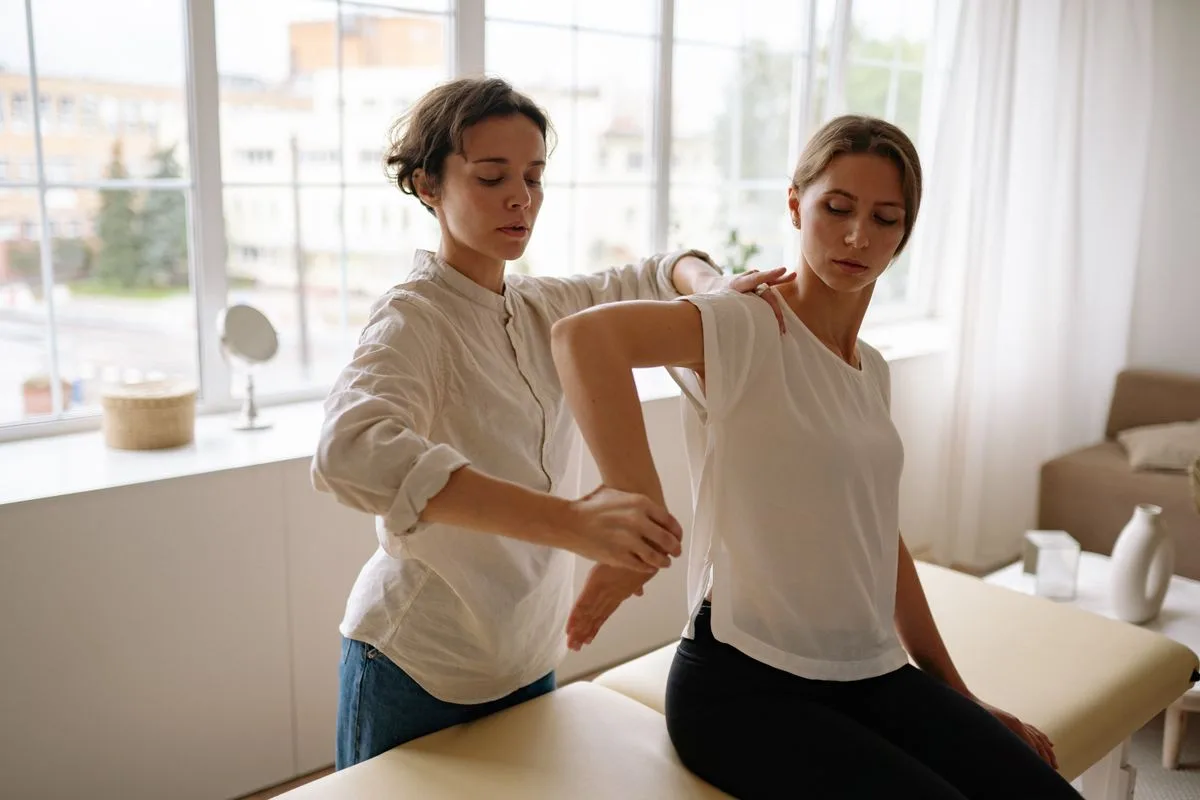
That catch in your shoulder that never fully lets go. The forearm that stays tight no matter how much you stretch it. The old injury that healed on the outside but still pulls and restricts underneath. Active Release Technique, often called ART, is built for exactly that problem. It is a patented, motion-based soft tissue treatment in which a therapist applies precise, targeted tension directly to a muscle, tendon, or nerve while guiding your body through a specific active or passive movement. That combination matters. Scar tissue and adhesions form after an injury, surgery, or months of repetitive strain, gluing layers of tissue together that are supposed to glide independently. Static pressure alone often cannot separate them. By pairing hands-on tension with movement through the exact range that is restricted, ART works the adhesion loose from the inside while the tissue is actually in motion, rather than trying to break it down while everything sits still. It is frequently used for repetitive strain injuries like tennis elbow and carpal tunnel-type nerve irritation, as well as lingering restriction from old sprains, strains, or post-surgical scarring that never fully resolved.
ART requires specific credentialing beyond general PT training, with separate certification for each region of the body, because the technique depends entirely on what the therapist's hands can feel and interpret in real time. A trained provider can distinguish a genuine adhesion from normal muscle tissue by texture and tension alone, and knows exactly how much pressure to hold as you move through the motion. That precision is what separates ART from a deep tissue massage: the treatment is not just pressure, it is pressure applied at a specific depth, angle, and moment during your own active movement.
ART works best for movement restriction that traces back to scar tissue, adhesions, or a nerve that is getting caught somewhere it should slide freely. If a specific spot has stayed stuck since an old injury, this is worth exploring.
Tennis elbow, golfer's elbow, or a wrist that aches from the same motion done thousands of times. ART targets the specific tissue that has thickened and stuck from overuse, restoring glide that rest alone has not fixed. It is often the difference between managing the pain and actually resolving it.
A surgery, sprain, or strain healed months or years ago, but the area never moved quite the same afterward. ART breaks up the adhesions left behind so the tissue layers can glide independently again, the way they did before the injury.
Tingling down the arm or leg is often a nerve caught in tissue that has tightened around it, not the nerve itself. ART frees the surrounding tissue so the nerve can move and signal normally again, easing symptoms that started somewhere else entirely.
ART sessions are hands-on and interactive. Rather than lying still, you will be moving through specific ranges of motion while the therapist works.
Your therapist feels through the affected muscle, tendon, or nerve path to locate the exact adhesion or restriction, testing how the tissue responds to light tension. This mapping step is what makes the treatment that follows so specific instead of general.
The therapist applies firm, specific pressure to the restricted tissue while you actively move the area, or the therapist moves it for you, through the exact range that has been limited. It can feel intense but should not feel unbearable, and most people describe it as a deep, productive discomfort.
Once the tissue has been worked, your therapist retests the movement immediately to confirm the range has improved. Many people notice a difference in the same visit, though full changes often build across a short series of sessions.
Tell your therapist about any recent fractures, blood clotting disorders, or areas of active, acute inflammation before your session, since ART is not appropriate directly over these. Mild soreness for a day afterward is common and typically settles quickly.
Hannah and Jackie are fantastic. My chronic back strain began two years ago and I was able to make it better.
Active Release Technique pairs well with manual therapy and sports physical therapy for overuse and soft tissue problems. Common reasons patients ask about it:
Ask about Active Release Technique at our Portsmouth NH physical therapy clinic, Dover NH clinic, or Epping NH clinic. One-on-one care, same-week evaluations, and no referral needed in New Hampshire.

Hands-on techniques to release tension and restore movement where you need it most.

Recover from injury and return to your sport stronger, with training built for the demands you love.

Evidence-based strategies to break the cycle of constant pain and get your life back.