Both target tight, painful muscles, but they work differently and suit different situations. Here is how to tell which one makes sense for you.
Medically reviewed by Dr. Natalie Tilton, PT, DPT, Owner of Ability Allies · Published

Tight, tender muscle is one of the most common reasons people look for hands-on care. Knots in the upper shoulders, a hip that aches after a run, or a low back that tightens up by the end of the workday all have something in common: muscle that has become sensitive and is not letting go.
Massage uses hands-on pressure, kneading, and stroking over the muscles. It can cover a broad area, and many people find it relaxing and helpful for general muscle tension and stiffness.
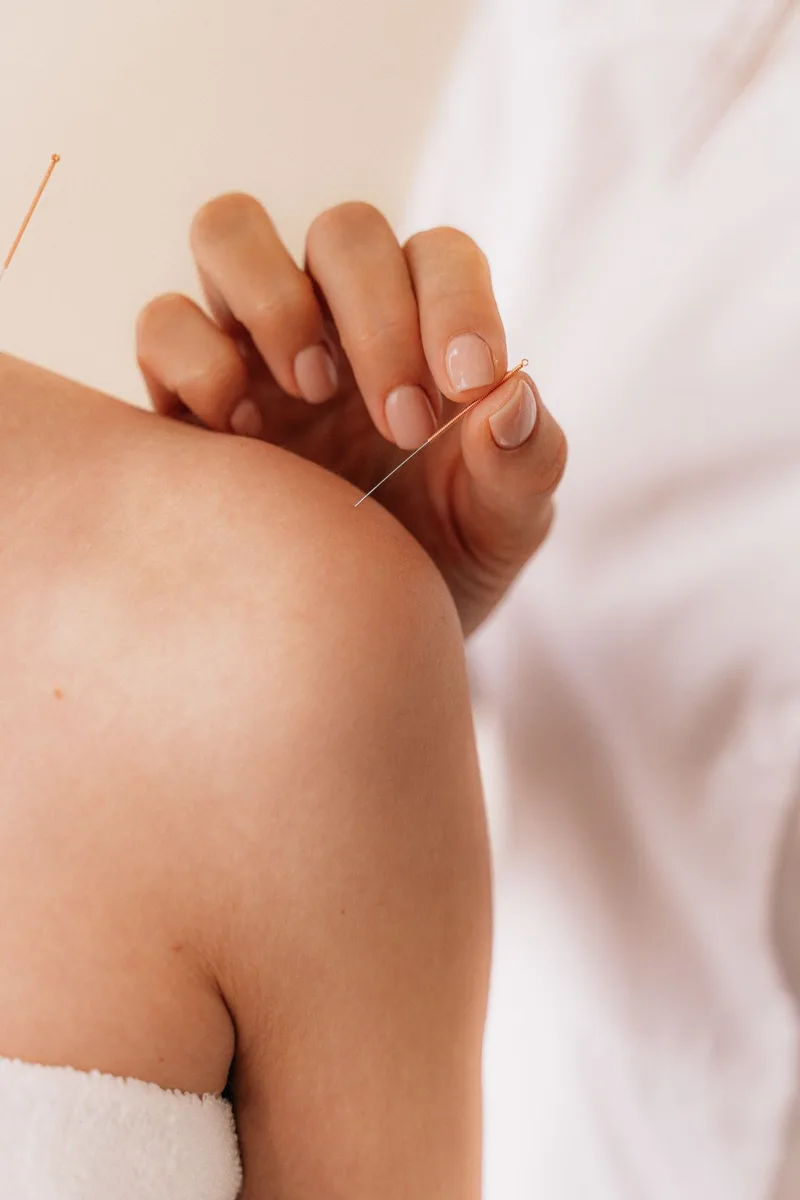
Dry needling uses a thin, solid filament needle placed directly into a tight, tender spot within a muscle, often called a trigger point. The needle can trigger a brief twitch and release in the muscle. It is not acupuncture. Acupuncture is based on traditional meridian systems, while dry needling is based on modern anatomy and is aimed at specific muscle tissue.
Massage typically feels like firm pressure that can range from soothing to intense in tender spots. With dry needling, the needle insertion itself is usually brief. You may feel a twitch, a deep ache, or a sudden release as the muscle responds.
Massage works well across large areas and multiple muscle groups. Dry needling is precise. It goes directly to a specific spot that may be hard to reach with hands alone.
Massage is provided by massage therapists in many settings. At a physical therapy clinic, hands-on soft tissue work is part of manual therapy, which also includes joint mobilization and is guided by a full evaluation. Dry needling should always be performed by a therapist trained specifically in the technique.
Both can leave you a little sore. After dry needling, some soreness for a day or two is normal, and many people notice easier movement within hours.
It does not have to be either one or the other. Many people do well with a combination, and the right choice depends on what is driving your pain.
Hands-on manual therapy or massage may suit you better if:
Dry needling may be worth considering if:
Neither dry needling nor massage is a complete fix on its own. Both work best when they calm the muscle enough for strengthening and better movement habits to take hold, so the tension does not keep coming back.
Before dry needling, tell your therapist if you are pregnant, take blood thinners, or have needle anxiety. These do not automatically rule out treatment, but your therapist needs to know so they can adapt the approach or choose a different technique.
Muscle pain is usually mechanical, but some symptoms need medical attention rather than hands-on treatment. Contact your doctor promptly if you have:
We start with an evaluation, not a technique. Your therapist finds where you have lost motion, which muscles are guarded or overworked, and what is loading them. From there we may use manual therapy, dry needling, or both, always paired with exercise so the change lasts beyond the session.
A combined visit often starts with a quick check of how you responded since the last session, followed by hands-on work or dry needling to the areas that are most guarded, then exercises that use the new range of motion while it is available. Over time the hands-on portion usually shrinks and the exercise portion grows, because the goal is for your muscles to stay calm on their own rather than needing treatment to keep them that way.
If you are unsure which approach fits, that is exactly what the first visit is for. You can request an appointment and talk it through with your therapist.
Dr. Natalie Tilton earned her Doctorate of Physical Therapy from Northeastern University and has spent over 15 years in the field, practicing across orthopedics, post-surgical recovery, sports rehabilitation, aquatic therapy, pediatrics, and pulmonary rehab. She is certified in the Hesch Method, Graston Technique, Dry Needling, Kinesiotaping, CranioSacral Therapy, Cupping, and Custom Foot Orthotic Casting, and she is the owner of Ability Allies. Read Dr. Tilton’s full bio →
Your evaluation determines whether dry needling, manual therapy, or a combination is the right fit, always paired with exercise that keeps tension from returning.
We see patients at our Portsmouth physical therapy clinic, Dover clinic, and Epping clinic. Call (603) 770-0408 to ask about dry needling and find the right location for you. No referral needed in New Hampshire.