By Ability Allies · Published

If you enjoy lifting weights, you may have heard that heavy lifting can wear down your joints over time. Whether you’re squatting with a barbell, deadlifting, pressing overhead, or working toward a new personal record, you might wonder whether the weight you’re lifting today could lead to joint pain or arthritis later in life.
The good news? Lifting weights does not automatically damage your joints. In fact, when approached strategically, strength training can support joint health, improve muscle function, and help you maintain strength as you age.
Your body is designed to adapt to the demands you place on it. With appropriate loading, recovery, and movement strategies, your muscles, bones, tendons, and other supporting structures can become better equipped to tolerate physical stress.
However, the way you train matters. Understanding how to manage training intensity, recognize warning signs, and recover between workouts can help you stay consistent in the gym.
For weightlifters throughout the NH Seacoast, understanding the relationship between strength training and joint health is an important step toward building a stronger body that continues to support your goals.
One of the most common misconceptions about strength training is that heavier weights inevitably lead to joint degeneration. This belief often causes people to avoid lifting heavy altogether, particularly if they have experienced knee pain, shoulder discomfort, or lower back pain.
However, joint health is not simply a matter of how much weight you lift. It also depends on factors such as your training history, exercise technique, total training volume, recovery, and how quickly you increase the demands placed on your body.
Strength training exposes your body to mechanical stress. In response, your muscles and bones can adapt to become stronger. Tendons and other connective tissues can also adapt to loading, although these changes may occur more gradually than improvements in muscle strength.
Appropriately prescribed resistance exercise is commonly used in physical therapy to help people improve strength, function, and tolerance for everyday activities.
This doesn’t mean every lifting program is appropriate for every person. Excessive training loads, sudden increases in intensity, and inadequate recovery can contribute to pain or injury.
The goal isn’t to avoid challenging your body. It’s to introduce challenges that match your current capacity and progress at a manageable pace.
When you lift weights, your joints experience forces that help your body move and support external loads. Experiencing these forces is a normal part of physical activity.
Mechanical stress alone does not mean that a joint is being damaged. In fact, appropriate movement and loading help maintain the strength and function of the tissues surrounding your joints.
Problems can arise when the demands of training consistently exceed your body’s ability to recover and adapt.
For example, suddenly doubling your squat weight or dramatically increasing your weekly training volume may place more stress on your knees, hips, or back than they are prepared to tolerate.
Learning to distinguish between a normal training challenge and persistent or worsening pain can help you make informed decisions about your workouts.
Strength training offers several benefits that extend beyond building muscle or improving performance.
When programmed appropriately, resistance exercise can help improve your ability to tolerate physical activity, support joint function, and maintain independence throughout life.
Your muscles play an important role in controlling movement and managing forces throughout your body.
Stronger quadriceps, hamstrings, and gluteal muscles can help support lower body movements such as squatting, climbing stairs, and walking. Similarly, strengthening the muscles around your shoulders and upper back can improve your capacity for pushing, pulling, and lifting overhead.
Building strength doesn’t eliminate joint stress, but it can improve your ability to perform activities with control and confidence.
Resistance training places mechanical demands on your bones, encouraging them to adapt to loading. Alongside other weight-bearing activities, strength training can help maintain bone health.
This becomes particularly important as you age, when preserving bone density and muscle mass can contribute to maintaining physical function.
A well rounded strength program can therefore support more than your performance in the gym. It can also help prepare your body for the physical demands of everyday life.
Your tendons connect muscles to bones and help transfer force during movement. Like muscles, tendons respond to mechanical loading, although their adaptations generally take time.
Progressive resistance training can help improve tendon capacity and function. However, increasing training intensity too quickly may irritate tissues that haven’t adapted to the new demands.
This is why gradual progression matters. Your muscles may feel ready to lift heavier before your tendons and other supporting structures have fully adapted to the increased workload.
If lifting weights can support joint health, why do so many lifters experience knee, shoulder, hip, or back pain?
In many cases, the answer involves the relationship between training demands and the body’s current capacity.
Pain doesn’t automatically mean that you’ve damaged a joint. However, persistent discomfort can indicate that something about your training, recovery, movement, or overall health needs attention.
Several factors may contribute to lifting related pain.
Progressive overload is an important part of building strength. Over time, increasing resistance, repetitions, or training volume challenges your body to adapt.
However, progression needs to be appropriate for your current fitness level and training history.
Making large jumps in weight or returning to your previous training intensity after an extended break can overwhelm your current capacity.
Instead, increase training demands gradually and pay attention to how your body responds during the workout and over the following day or two.
Your body needs time to recover between challenging workouts.
Consistently training the same muscle groups with high intensity, increasing your weekly volume too quickly, or sacrificing sleep can make it harder to recover between sessions.
Recovery needs vary based on training experience, age, overall health, and the demands of your program.
If you’re experiencing persistent soreness, declining performance, or pain that worsens with each session, consider adjusting your training load and recovery schedule.
There isn’t one perfect way for everyone to squat, deadlift, or perform an overhead press.
Your anatomy, mobility, strength, training experience, and previous injuries can all influence which movements feel comfortable and effective.
For example, a squat variation that works well for one lifter may cause discomfort for another. Adjusting stance, range of motion, exercise selection, or loading may help you find an approach that better suits your body.
The goal isn’t to force yourself into a particular position. It’s to develop strength through movements you can perform comfortably and control effectively.
You don’t necessarily need to stop lifting heavy to protect your joints. Instead, focus on managing your training demands and giving your body the support it needs to adapt.
Avoid making sudden increases in weight, repetitions, or total training volume.
Small, manageable progressions allow your body to adapt while helping you identify which training demands you tolerate well.
Focus on performing exercises with control and a range of motion that works for your body.
Good technique isn’t about making every repetition look identical to someone else’s. It’s about selecting movements and loads that allow you to train effectively without repeatedly provoking symptoms.
Sleep, nutrition, rest days, and appropriate training frequency all contribute to recovery.
If your performance is consistently declining or discomfort is increasing, consider whether your current program allows enough time for your body to recover.
Not every ache requires you to stop exercising. However, pain that persists, worsens, changes your movement, or repeatedly returns during the same exercise deserves attention.
Rather than pushing through every symptom, consider modifying the load, range of motion, or exercise itself.
Seek professional evaluation if pain continues to interfere with your workouts or everyday activities. Significant swelling, an inability to bear weight, or sudden severe pain warrants prompt medical assessment.
A balanced training program should address more than your favorite lifts.
Include exercises that develop strength across different muscle groups and movement patterns. Adjust your program to account for your goals, current capacity, recovery needs, and any limitations that affect your training.
Variety doesn’t mean constantly changing your workouts. It means developing the strength and control needed to support the activities you want to continue doing.
Occasional muscle soreness after a challenging workout is common. Persistent joint pain, recurring injuries, or discomfort that limits your ability to lift are different.
If knee pain makes squatting uncomfortable, shoulder pain interferes with pressing, or lower back discomfort repeatedly returns during deadlifts, a physical therapist can help you understand the factors contributing to your symptoms.
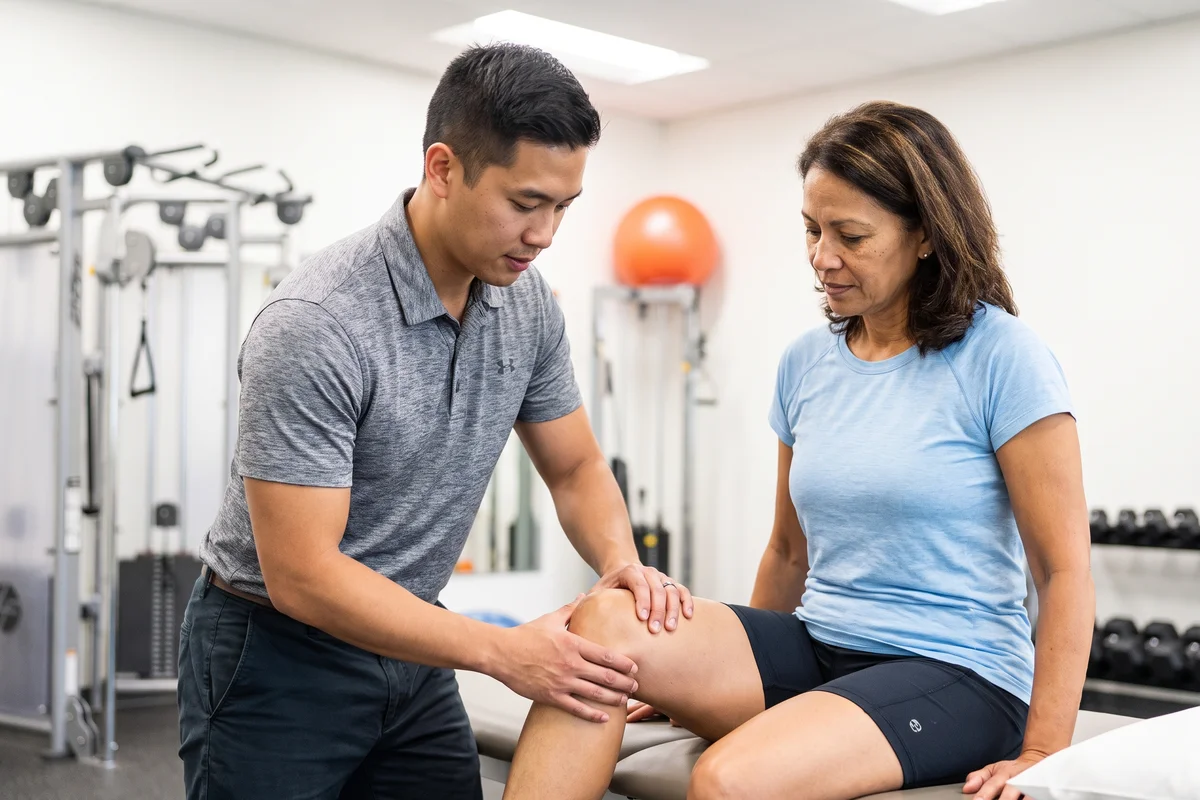
Physical therapy for weightlifters can include an assessment of strength, mobility, movement patterns, exercise tolerance, and training demands. Based on your individual needs, treatment may involve targeted strengthening, mobility exercises, movement modifications, and a gradual return to your preferred lifts.
Rather than automatically telling you to stop exercising, a physical therapist can help determine which activities you can continue, which modifications may be useful, and how to progress safely.
For lifters seeking physical therapy on the NH Seacoast, working with a therapist who understands strength training can help you develop a plan that supports both your recovery and your long term fitness goals.
Lifting heavy weights doesn’t automatically mean you’re damaging your joints. When approached appropriately, strength training can help build muscle, maintain bone strength, improve physical function, and support an active lifestyle.
The key is understanding that progress requires more than adding weight to the bar. Your training program should challenge your body while allowing enough time for recovery and adaptation.
If you’re experiencing persistent pain, you don’t necessarily have to give up the exercises you enjoy. With the right assessment and an individualized plan, you may be able to modify your training, address contributing factors, and gradually return to your goals.
At Ability Allies, physical therapy can help you better understand your body, address movement-related concerns, and develop strategies for staying active.
Whether you’re working toward a new personal record or simply want to keep lifting comfortably for years to come, the goal is the same: build a stronger, healthier body that supports the activities you love.
If joint pain is interfering with your training, consider reaching out to a physical therapist on the NH Seacoast to discuss your symptoms and explore your options.
An evaluation looks at your strength, mobility, movement patterns, and training load so you can keep lifting. Our sports rehabilitation team treats joint pain, hip and knee pain, shoulder pain, and back pain.
Ability Allies has clinics in Portsmouth, Dover, and Epping. Call (603) 770-0408 and we will help you find the right location and physical therapist. No referral needed in New Hampshire.