(603) 770-0408 · 68A Fogg Rd
Ability Allies

Ultrasound in Seacoast

Therapeutic Ultrasound sends sound waves deep into tissue that heating pads and ice packs cannot reach, encouraging healing from underneath the surface.

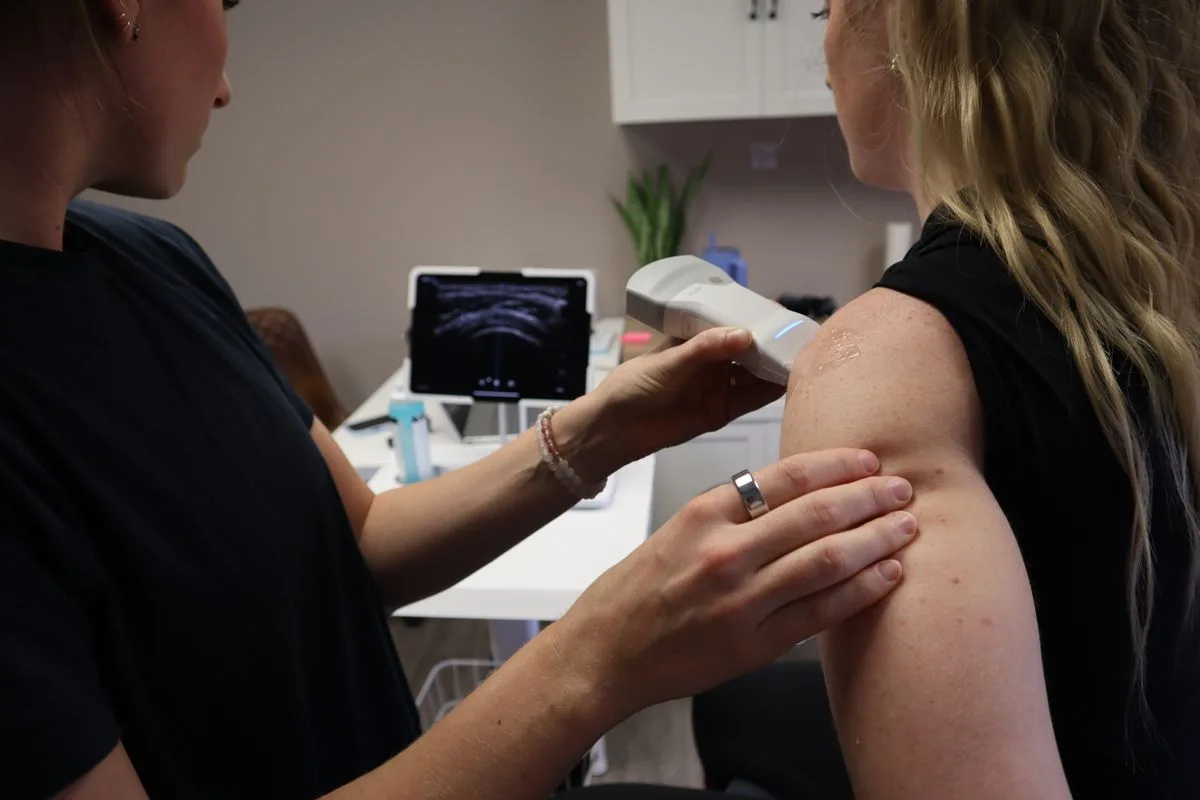
Ultrasound treatment session with a physical therapist at Ability Allies in Seacoast, NH
01What It Is

What is Ultrasound?

Therapeutic ultrasound is a treatment modality that uses high-frequency sound waves, well above the range of human hearing, delivered into your tissue through a handheld wand and a layer of conductive gel. Unlike diagnostic ultrasound used for imaging, therapeutic ultrasound is designed to create an effect in the tissue itself rather than produce a picture of it. The sound waves penetrate several centimeters beneath the skin, reaching muscle, tendon, and ligament tissue that surface treatments like heat packs or ice never actually get to. At higher, continuous settings, the waves generate a gentle deep heat that increases local blood flow and improves tissue extensibility, which is useful before stretching or mobilizing a stiff area. At lower, pulsed settings, the effect is largely non-thermal. Microscopic vibration at the cellular level can reduce inflammation and support the body's own repair processes without adding significant heat. Therapeutic ultrasound is commonly used for deep muscle tightness, tendon and ligament injuries, and scar tissue that has restricted movement after surgery, often as one piece of a broader treatment plan rather than a standalone fix.

Getting the right effect depends on the settings a therapist chooses, not just placing the wand on the skin. Frequency, intensity, treatment time, and whether the mode is continuous or pulsed all change what the tissue actually experiences, and a therapist trained in this modality selects those settings based on how deep the target tissue sits and what effect, heating or non-thermal, the situation calls for. That clinical judgment is what separates a treatment that genuinely reaches the target tissue from one that only warms the skin on top of it, without doing much of anything beneath the surface.

02Who It's For

Who it's for.

Ultrasound is for deep tissue tightness and healing that surface-level treatment has not been able to reach. These are the situations we use it for most often.

01

Deep muscle or tendon tightness

Tightness sitting below the surface has not responded to stretching or a heating pad. Ultrasound reaches several centimeters deep, warming and loosening tissue that surface treatments were never going to touch in the first place, often making the next round of stretching or manual work noticeably easier.

02

Scar tissue restricting movement after surgery

Scar tissue from a past surgery is limiting how a joint or muscle moves. Ultrasound can help soften and mobilize that restricted tissue, often used alongside manual therapy to restore the range of motion scarring has been holding back, especially in the months after a procedure when tissue is still remodeling.

03

Chronic tendon or ligament inflammation

A tendon or ligament injury has settled into a low-grade, ongoing inflammation that will not fully resolve. Ultrasound's non-thermal setting can calm that inflammation at a cellular level as part of a broader recovery plan, particularly for injuries that flare with activity but never quite settle down completely.

03What To Expect

What to expect in a session.

Ultrasound sessions are quick and low-key, often paired with other hands-on treatment in the same visit.

01

Assessment and gel application

Your therapist identifies the target tissue and depth, then applies conductive gel to the area. This gel is what allows the sound waves to transmit properly instead of scattering at the skin's surface, and it also lets the wand glide smoothly without dragging on your skin.

02

Wand treatment

The therapist moves the wand slowly and continuously over the treatment area for several minutes. Most people feel only a mild, comfortable warmth, if anything at all, since much of the effect happens well below what you can feel, at a depth no hands-on technique can access directly.

03

Follow-up exercise or manual work

Ultrasound is often followed immediately by stretching, manual therapy, or exercise, since tissue is more responsive to that work right after treatment. This pairing is usually where the real functional gain happens, turning a passive treatment into progress you actually feel in how you move.

Safety note

Ultrasound is not used over a pregnant abdomen, near a pacemaker, over areas of known malignancy, or directly over a blood clot. Your therapist screens for these factors before every session to keep treatment appropriate for your specific situation.

In Their Words
During my sessions at the clinic with Cam I have experienced a decrease in pain! I always walk into a positive atmosphere.
Caitlin V. · Google review
Your Next Step

Support healing inside a full plan.

Therapeutic ultrasound is used alongside manual therapy and exercise, never as a stand-alone fix. Common reasons patients ask about it:

Ask about ultrasound at our Portsmouth NH physical therapy clinic, Dover NH clinic, or Epping NH clinic. One-on-one care, same-week evaluations, and no referral needed in New Hampshire.

Explore More

Where to go next.

Request an Appointment

Ready when you are.

Epping HoursMon–Fri 8am–7pm, Sat–Sun Closed
Walk-insCall ahead
ClinicsPortsmouth · Dover · Epping
Book your evaluation. Same-week appointments available.
Step 1 of 6
First things first. What's your name?
We'll need a name to book you in.
Best number to reach you?
A phone number lets us confirm same-day.
And your email?
We'll send your confirmation here.
What questions do you have about your pain or injury?
A few words is all we need.
Which clinic works best for you?
Pick the clinic you'd like to visit.
Look right? Send it.
✓
Request received.

We'll call within business hours to lock in your time.

Book Now